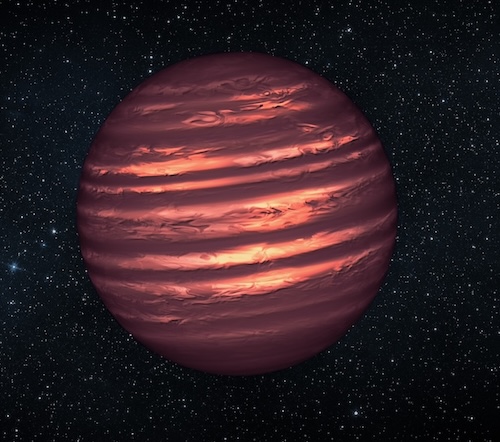
Where there are clouds there is weather. Clouds fundamentally alter the way that energy is transported in atmospheres. Their presence causes localised warming as they block heat from escaping to space, and this in turn can raise temperatures and drive winds. Moreover, the increased temperatures can lead to clouds evaporating, and then releasing the trapped heat.These dynamic processes may create tell tail signatures in the light we see emitted by brown dwarfs in the form of variations in brightness as gaps in the clouds rotate in and out of view.
Such variations in brightness have been seen, and we are now able to gather exquisite time-series spectra of variable brown dwarfs.
However, there is another possible source of variability that we must disentangle from that caused by weather.
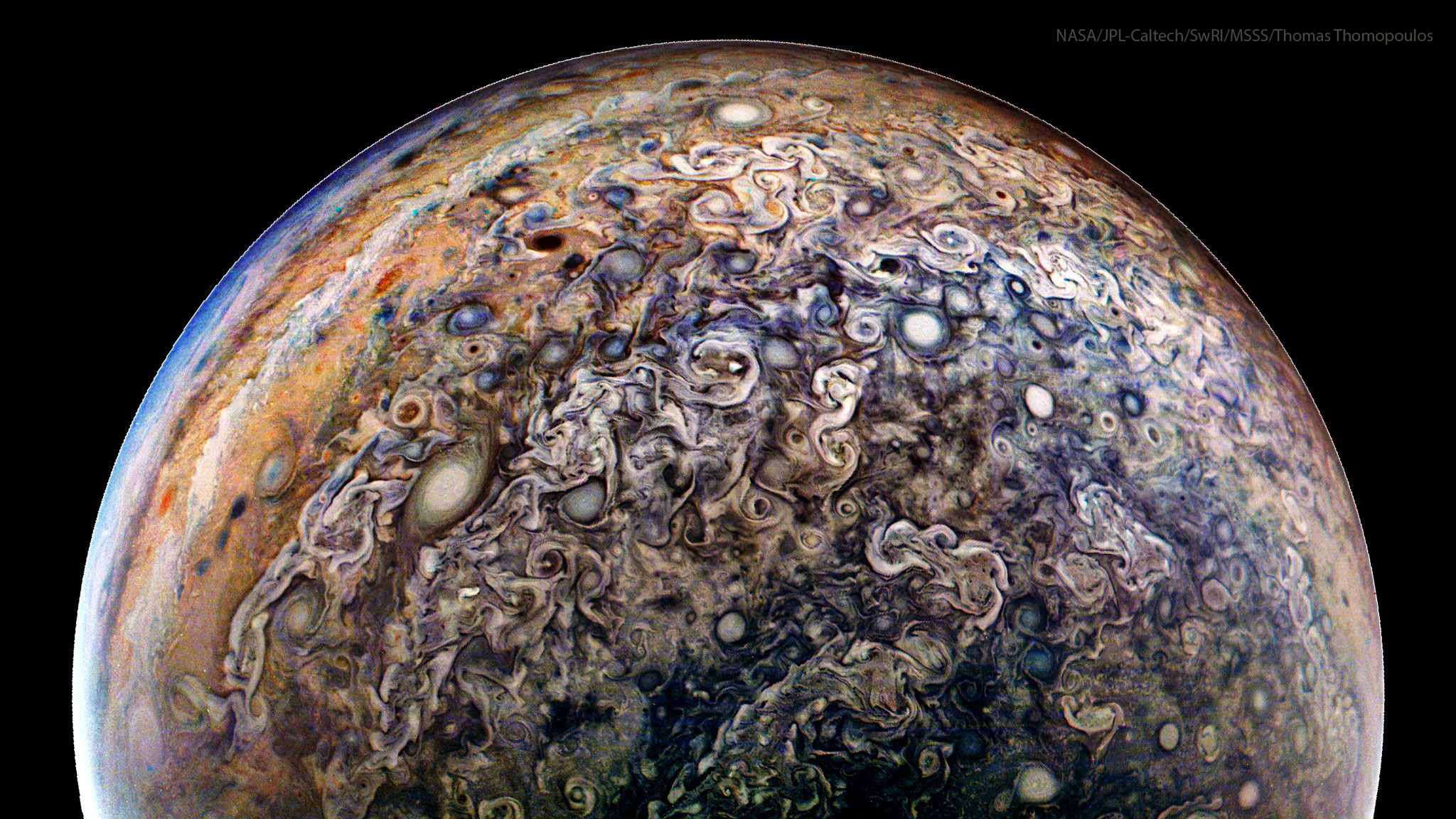
Jupiter displays the most powerful aurorae in the Solar system, visible by space telescopes at UV and infrared wavelengths and detectable by their radio emissions. These aurorae are fed by gas from Jupiter's moons, and powered by its strong magnetic field and rapid 10 hour rotation period.
The same kind of radio emissions have been detected in about 1 in 20 brown dwarfs, and all of these objects are also variable at near-infrared wavelengths.
It is not yet understood how much of the variability is related to auroral activity, and what impact this activity has on the atmospheres of these brown dwarfs. Their magnetic fields are in some cases 1000x stronger than Jupiter's and rotation periods can be as little as 2 hours, which can drive powerful electric currents.
In the Solar System, heating by auroral activity has been suggested as an important factor in explaining the hot stratospheres of the giant planets.
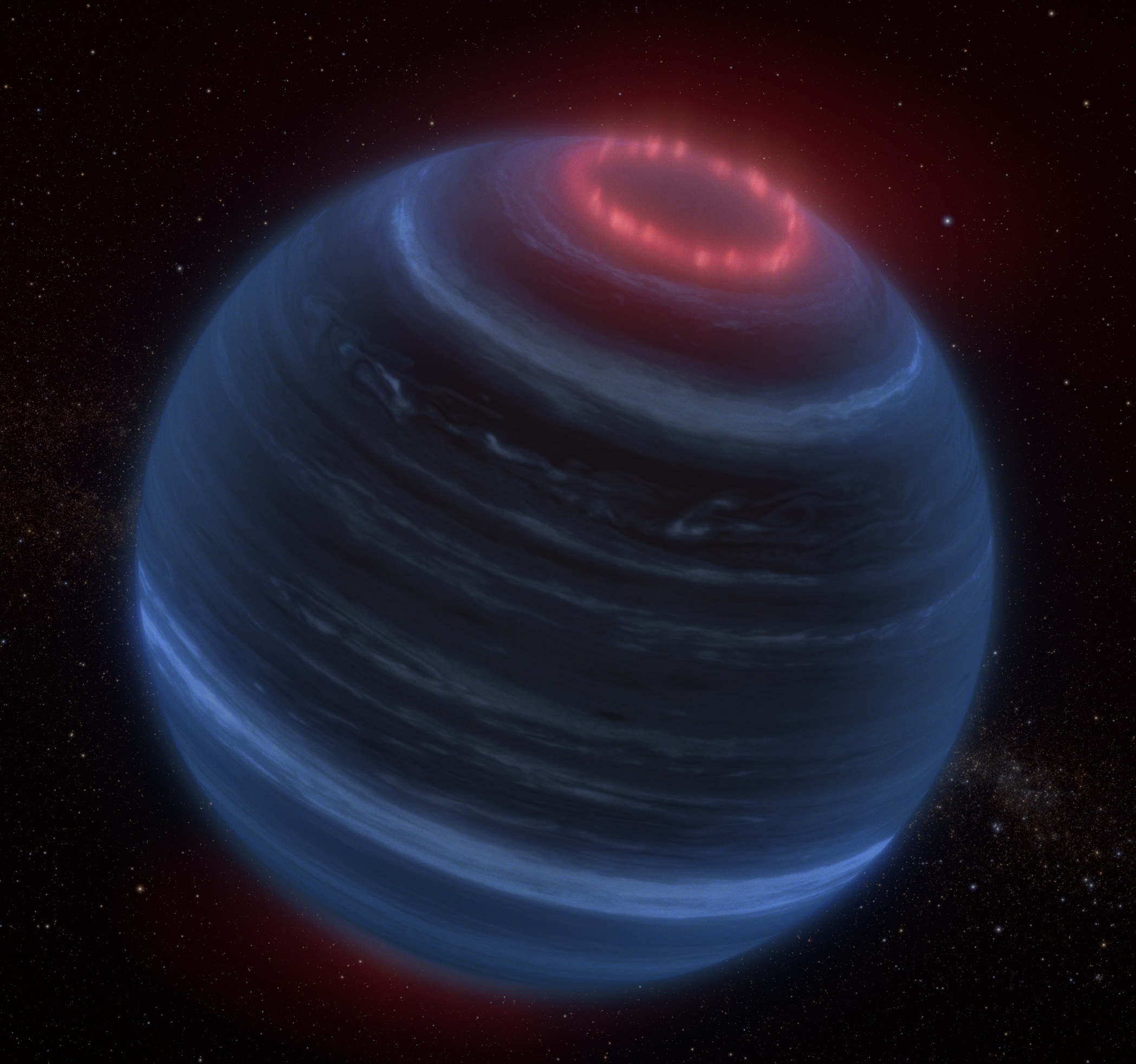
We have discovered one brown dwarf with a 300 degree temperature inversion in the upper atmosphere that makes methane gas at the top of its atmosphere glow.
We are developing techniques to unpick what is driving the variability in substellar objects, and to understand the impact of auroral process and clouds on energy transport.